What the badges on a seller mean
Three marks, three different checks — and what none of them promise.
A badge says something specific was checked. It is worth knowing exactly which thing, because a seller with all three is still a stranger you have not met.
Reading a seller's badges
Step 1: The badges sit at the top of the seller box, on the ad page and on the seller's own page. A seller can have none, one, or all three.
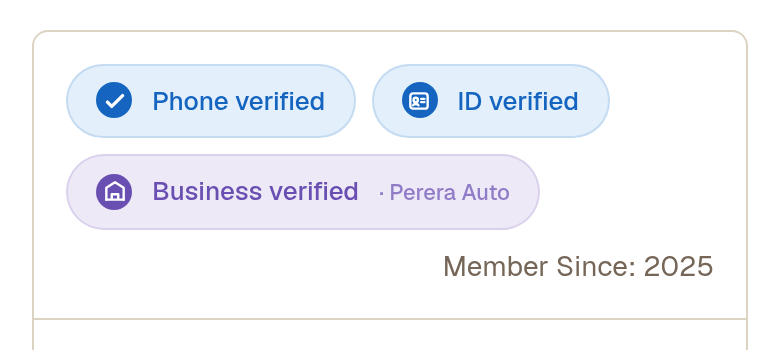
Step 2: Phone verified means the number on the account received a code and it was entered correctly. It proves someone controls that number. It does not tell you their name.
Step 3: ID verified means the seller sent their NIC and our team checked it against the account name. This is the strongest of the three, and it is the one to look for on anything expensive.
Step 4: Business verified means the account is registered as a dealer or agent rather than a private seller. The shop name appears beside the badge.
Step 5: The same badges show on the seller's page, next to how long they have been on Maaru. Look at both together — a badge plus a few years is a better signal than either alone.
What this cannot do
- Badges are about the seller, not the item. Nothing here has checked the thing you are buying.
- No badge is a guarantee or an insurance. Maaru does not hold your money and is not part of the deal.
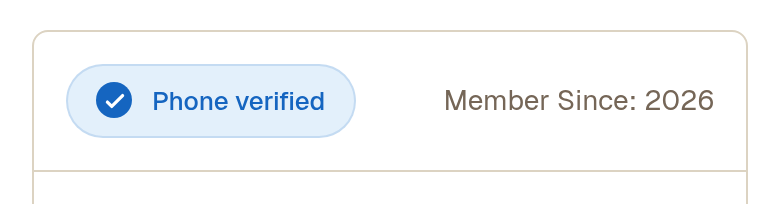
- Most honest sellers have only the phone badge. A missing ID badge is not a warning sign on a cheap item — it just means they have not sent their NIC.
Watch out for
- Do not let badges replace the ordinary checks. See the item, meet in a busy public place in daylight, and pay only once you have it in your hands.
- Be more careful, not less, when a badged seller pushes you to pay in advance or move the conversation somewhere else. A real badge does not make an unusual request normal.
- A shop name in a badge is the name on the account. It is not proof of a registered company, and it is not a shop you have visited.